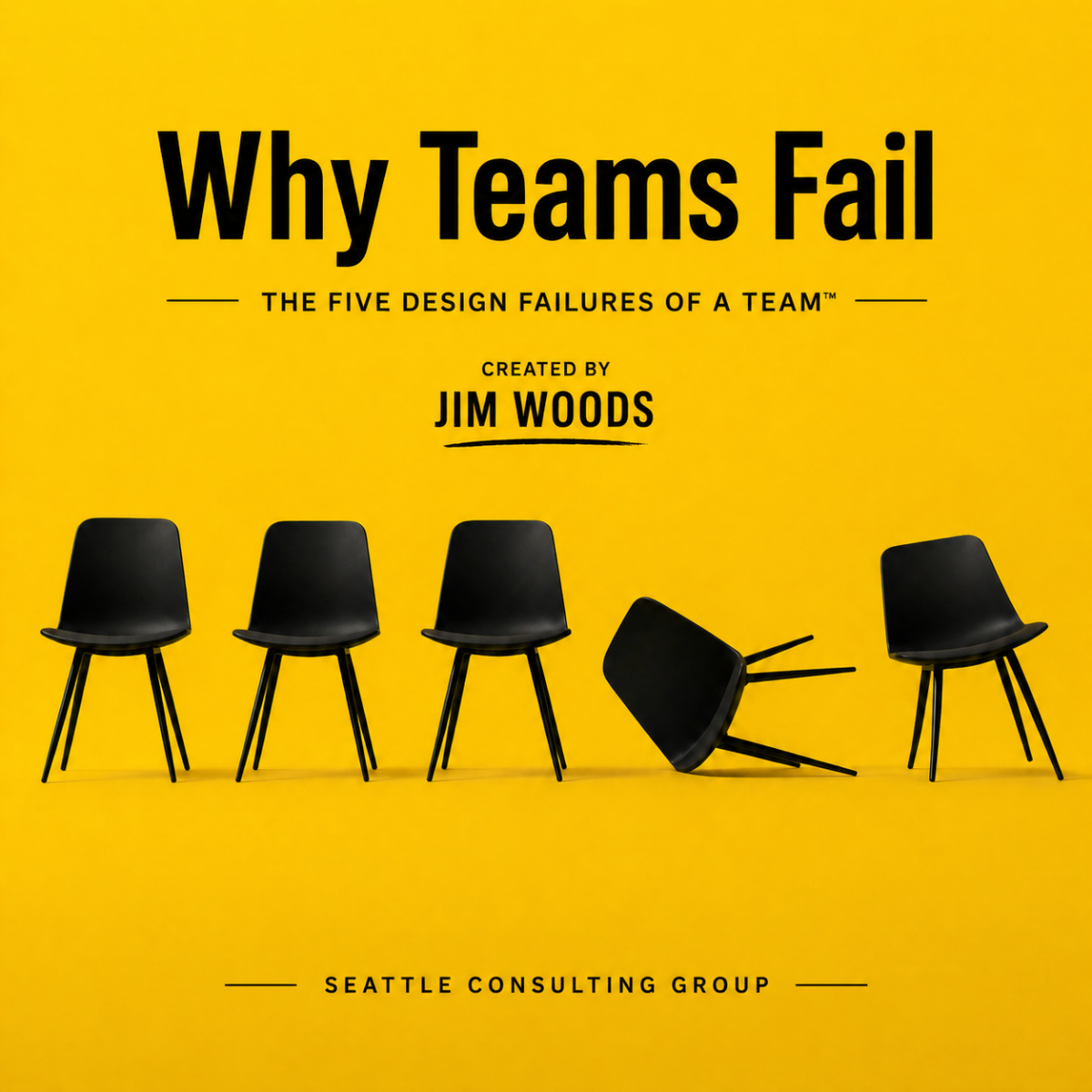
Beyond Patrick Lencioni’s Five Dysfunctions of a Team: Why Modern Teams Fail by Design
Most team problems are not caused by low trust or weak communication. They are often the result of poor design: unclear ownership, slow decisions, conflicting incentives, and inconsistent leadership standards. This article explores why many legacy team models no longer explain modern underperformance—and what high-performing organizations do instead.

AI Isn’t Killing Middle Management—It’s Exposing What It Was Never Designed to Do
AI is making something visible that was easier to ignore before. As systems improve, organizations no longer struggle to see what’s happening. Performance signals surface earlier, patterns are clearer, and issues appear before they escalate. But visibility doesn’t resolve what follows. It simply moves the pressure to a different point—where information must become a decision.
That’s where variation begins to show. Two managers see the same signal and respond differently. Not because they lack capability, but because the decision itself isn’t consistently defined. Over time, those differences compound. What looks like a problem of management layers is often something else entirely—the absence of a clear, shared model for how decisions are made once the signal appears.
Ethics Isn’t Failing Because People Lack Character
Most organizations treat ethics as a question of character. Yet recurring ethical failures rarely stem from bad people—they emerge from systems that unintentionally permit the wrong behavior. Ethical performance is less about intention and more about organizational design.

Why Effort Keeps Failing—and What Leaders Misdiagnose Instead
Effort didn’t fail. The system did.
Most performance breakdowns are treated as motivation problems. Leaders respond with urgency and encouragement, then push harder when results don’t follow.
What they rarely question is the structure those efforts move through.
When people work hard and outcomes remain inconsistent, the issue isn’t engagement.
It’s design.
Systems produce the results they are built to produce—again and again.

The Myth of the People Strategy — Why “People First” Failed and How System Integrity Restores Control
“People first” sounded noble — but it failed as an operating principle.
People don’t fail systems. Systems fail people.
When accountability, structure, and enforcement are missing, culture drifts and execution collapses. The solution isn’t more empathy — it’s system integrity: design that protects people by holding performance in place.
That’s what The Culture Execution Audit™ delivers — a diagnostic that exposes culture drag and quantifies its financial cost.
Followed by The Woods HR Power Model™ Intensive, it turns insight into control — replacing sentiment with structure, and partnership with power.
Because when systems hold, people don’t just perform — they scale.